Narcissistic relationships
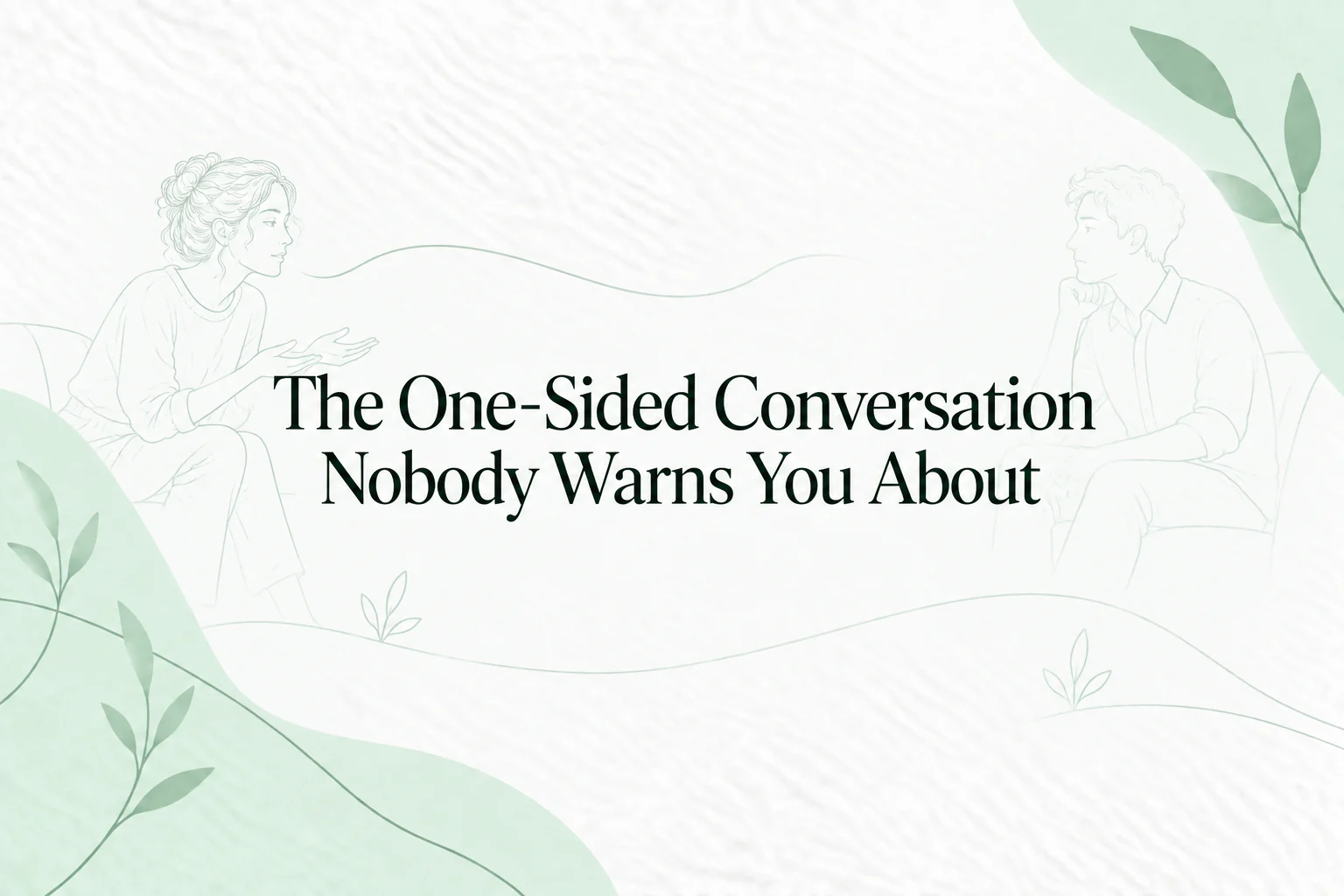
The One Sided Conversation Nobody Warns You About
Picture two different conversations. In the first, you mention you had a rough morning, and the other person actually asks what happened. They react to what you said. Maybe they share something similar that happened to them. It flows back and forth, and by the end you feel a little lighter, like you were actually heard.
Now picture the second. You mention the same rough morning. There's no response to that at all. Instead, they launch into a complaint about traffic, or the neighbour, or something they saw online, completely unrelated to what you just said. You answer their questions when they have one, but nobody ever asks how you're doing. If this second version feels painfully familiar, there's a good reason for it, and it isn't that you're being too sensitive.
What actually happens in these conversations
In relationships with someone who has strong narcissistic traits, conversation often isn't really a conversation at all. It's closer to being talked at. They'll comment on the world around them, usually in a fairly negative or complaining tone, and expect you to nod along or agree. If you gently disagree or offer a different perspective, you may suddenly become the target of their irritation instead. So most people learn, without even realising it, to just go along with the commentary to keep the peace.
What's missing is genuine curiosity. They rarely ask how you're doing, what happened in your day, or how something felt for you. And if you do share something personal, it's common for the conversation to be pulled straight back to them, or for your comment to simply go unacknowledged, like it was never said at all.
Why it leaves you feeling so alone
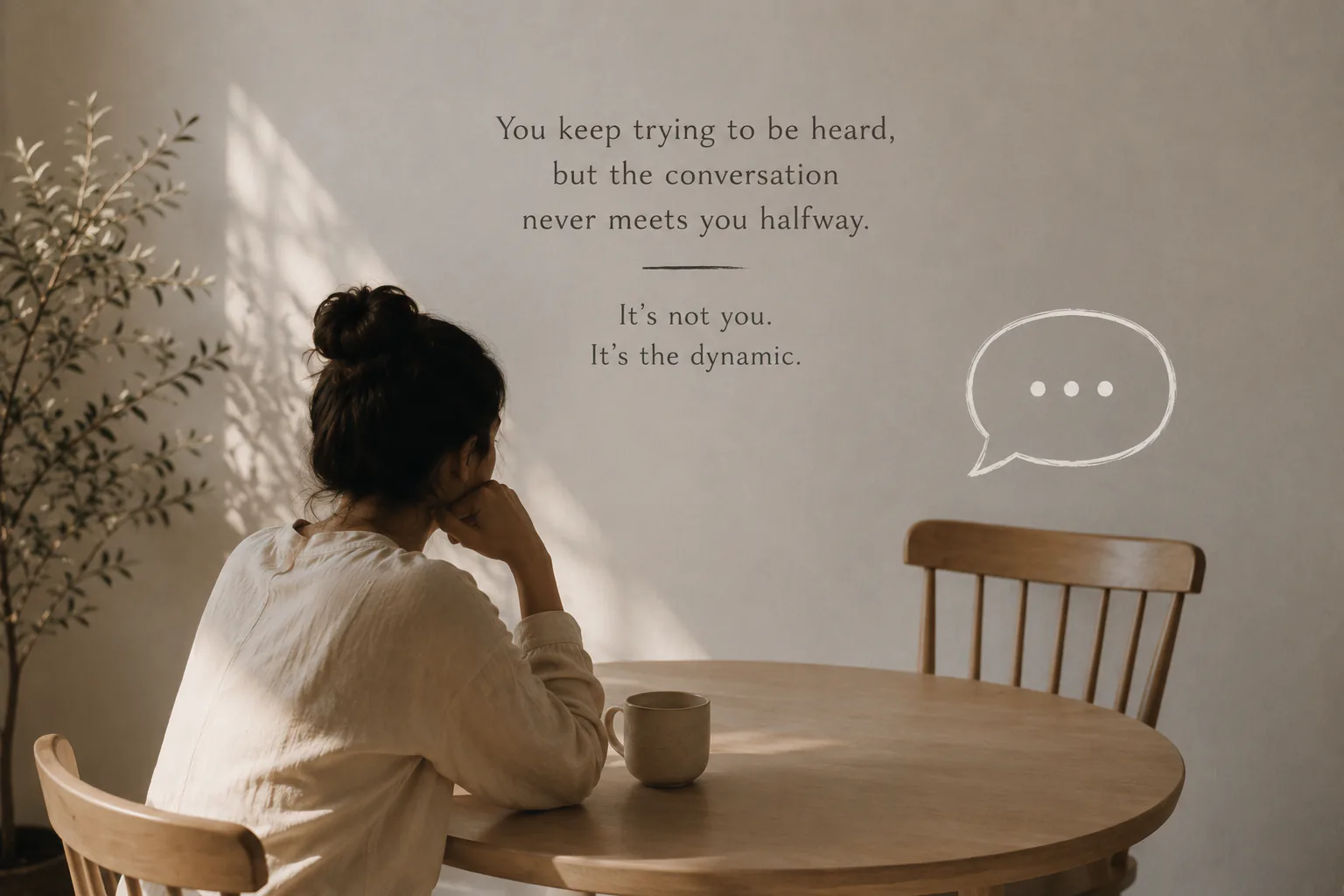
This is part of what makes these relationships so quietly disorienting. From the outside, it looks like a normal relationship. Two people, sitting together, talking. But if you're the one constantly listening, constantly asking, constantly trying to keep the conversation alive on your own, it starts to feel less like connection and more like performing one. Over time, that imbalance chips away at you. You might start wondering if you're expecting too much, if you're being needy, if a good conversation is even something you're allowed to want.
It's worth knowing that even the moments that do feel like back and forth exchange aren't always what they seem. Sometimes what looks like a real conversation is actually someone twisting your words, denying something they clearly said, or turning your honest question into an attack on you. That's not reciprocity. That's a different kind of one sidedness wearing a disguise.
The early attentiveness that quietly fades
Many people look back and remember a time when this person seemed completely absorbed in them, hanging on every word. It's worth understanding that this kind of intense early attention doesn't always mean what we hope it means. Sometimes it's genuine interest. But sometimes it's simply a phase where someone is learning everything about you because you're still new and useful to know. Once that phase passes, so does the attentiveness, and conversations quietly shift back to being mostly about them.
A more realistic way to see it
If this pattern sounds familiar, it can help to stop expecting the kind of conversation you'd have with someone who is genuinely curious about you, and start recognising this for what it more often is, a mostly one directional stream of commentary that happens to be aimed in your general direction. That reframe isn't meant to sound harsh. It's meant to protect you from the exhausting cycle of blaming yourself for a connection that was never really designed to go both ways.
And it's also a gentle reminder to keep other people, other conversations, in your life too. Ones where you speak and someone actually listens, where your day matters as much as theirs does. That kind of reciprocity is not too much to want. It's simply what a real conversation is supposed to feel like.
The takeaway
If you always leave conversations feeling unheard, you are not needy and you are not too sensitive. Some relationships were never built to flow both ways. Naming that frees you from blaming yourself, and reminds you to keep people in your life who actually listen. Wanting to be heard is not too much. It is the bare minimum of real connection.