Trauma & healing
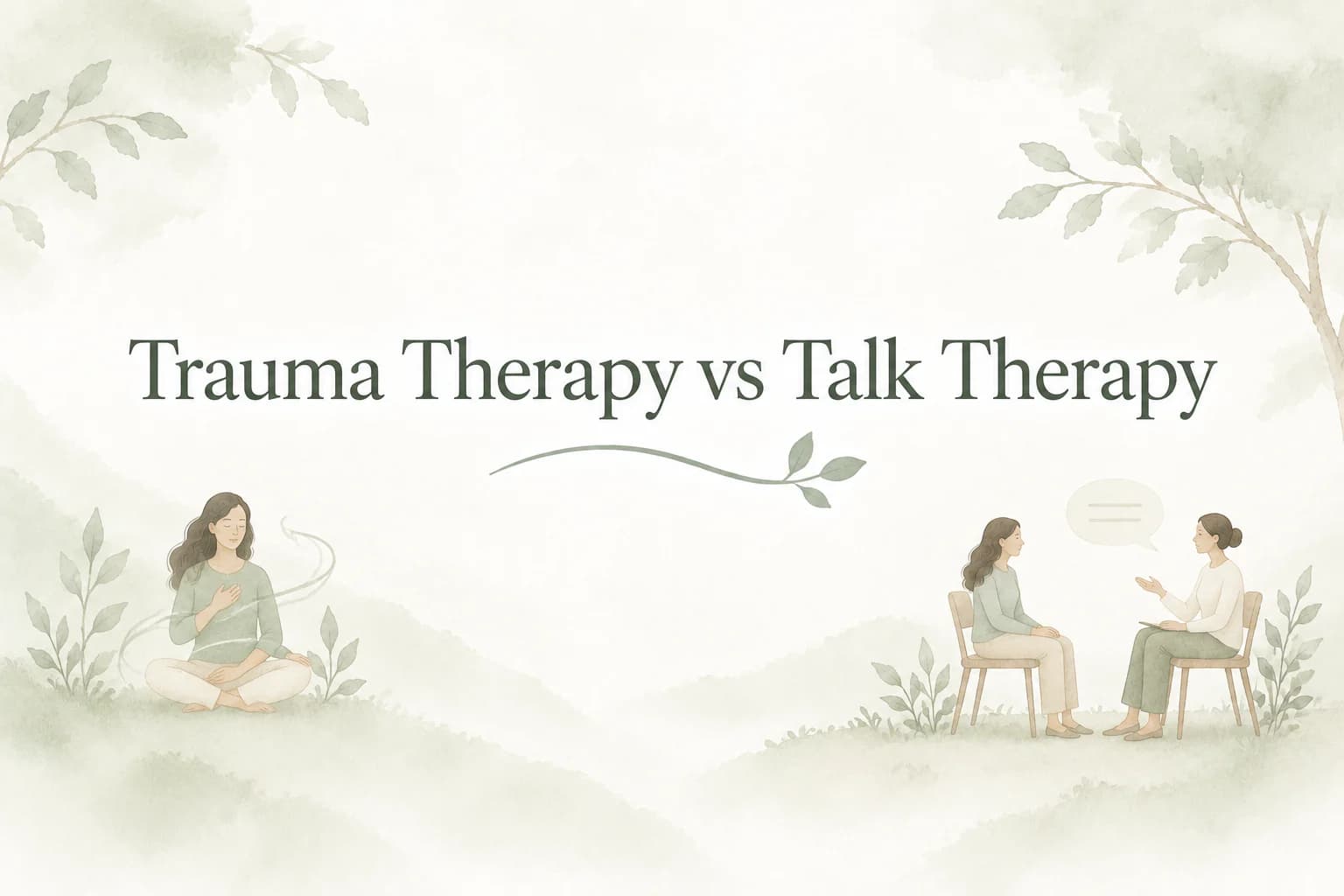
When Talking Isn't Enough: How Trauma Focused Therapy Is Different From Talk Therapy
Have you ever understood exactly why you feel a certain way, and still felt it anyway?
You know your fear of speaking up in meetings comes from a childhood where your voice was never welcome. You can explain it clearly. You have talked about it, maybe for years. And yet the moment someone turns to you and says "what do you think," your heart still pounds, your mind still goes blank, and your body still acts like it is in danger.
If that is you, you are not failing at therapy, and your therapist is not doing anything wrong. You have simply reached the edge of what talking alone can do. This is one of the most important things I explain to new clients, so let me walk you through it in plain terms.
How talk therapy works
Most people, when they picture therapy, picture two chairs and a conversation. That is talk therapy, and a lot of it is what we call cognitive work. Cognitive means thinking. So the focus is on your thoughts, your beliefs, and the stories you tell yourself.
It works something like this. You and your therapist look at a thought that causes you pain, something like "I am not good enough." You examine where it came from. You question whether it is actually true. You practice replacing it with something kinder and more accurate. Over time, you get better at catching the unhelpful thought and choosing a different one.
This is genuinely useful. For a lot of everyday struggles, changing how you think really does change how you feel. If your problem lives mostly in your thinking brain, talk therapy can help you a great deal.
But here is the catch. Talk therapy speaks to the thinking part of your brain. And trauma does not live there.
Where trauma actually lives
Imagine your brain has two parts working together. One is the thinking brain. It reasons, plans, and puts things into words. The other is the survival brain, the older, faster part whose only job is to keep you alive. It does not think in sentences. It thinks in sensations, images, and gut level alarms.
When something overwhelming happens, especially early in life, the memory does not always get filed away neatly with words and a sense of time. Instead it gets stored in the survival brain and in the body, raw and unprocessed. That is why a certain tone of voice, a smell, or a facial expression can suddenly flood you with fear that feels far bigger than the present moment. Your survival brain is not remembering the past. It is reliving it, right now, as if it were still happening.
Think of it like a smoke alarm that never got switched off after the fire. The fire ended long ago. But the alarm still shrieks every time the toaster so much as warms up. You can stand under that alarm and calmly explain that there is no fire. It will keep screaming anyway, because it does not speak the language of logic.
This is the whole reason talking isn't enough. You cannot reason with a survival brain using a thinking brain tool. To calm that alarm, you have to reach the part of you where the trauma is actually stored, the body and the nervous system. That is what trauma focused therapy does.
How a trauma focused approach works
A trauma focused approach starts from a different belief. It says the goal is not only to understand your pain, but to help your nervous system finally finish processing what it never got to process, so the old alarm can switch off for good.
Two things matter most here. The first is safety. None of this deeper work happens until your body actually feels safe, because a nervous system that is bracing for danger cannot heal. So we go slowly, at your pace, and we build that sense of safety first. The second is the body. Instead of staying only in conversation, we gently include what is happening in your body, because that is where the trauma has been waiting to be released.
It is less like arguing with the smoke alarm and more like carefully rewiring it, so it finally learns the fire is over.

The therapies under the trauma focused umbrella
Trauma focused approach is not one single method. It is a family of them. Here are the main ones I use, in plain terms.
- EMDR
- EMDR, which stands for Eye Movement Desensitization and Reprocessing. While you briefly bring a difficult memory to mind, I guide your eyes or your attention back and forth in a steady rhythm. This gentle back and forth seems to help the brain do what it does naturally during deep sleep, which is to finally file a stuck memory away properly. The memory stops feeling like it is happening now, and starts feeling like it is truly in the past.
- Internal Family Systems
- Internal Family Systems, or IFS. This one treats your mind as having different parts, almost like an inner family. There is the anxious part, the harsh critic, the part that shuts down. Instead of fighting these parts, we get to know them with curiosity and kindness. Most of them turned out to be protectors, doing an exhausting job of keeping you safe. When they feel understood, they can finally relax.
- Somatic therapy
- Somatic therapy. Somatic simply means "of the body." Here we pay attention to physical sensations, the tightness, the numbness, the held breath, and help your body gently discharge the survival energy it has been holding, sometimes for years. It is trauma healing that happens through the body rather than around it.
- Brainspotting
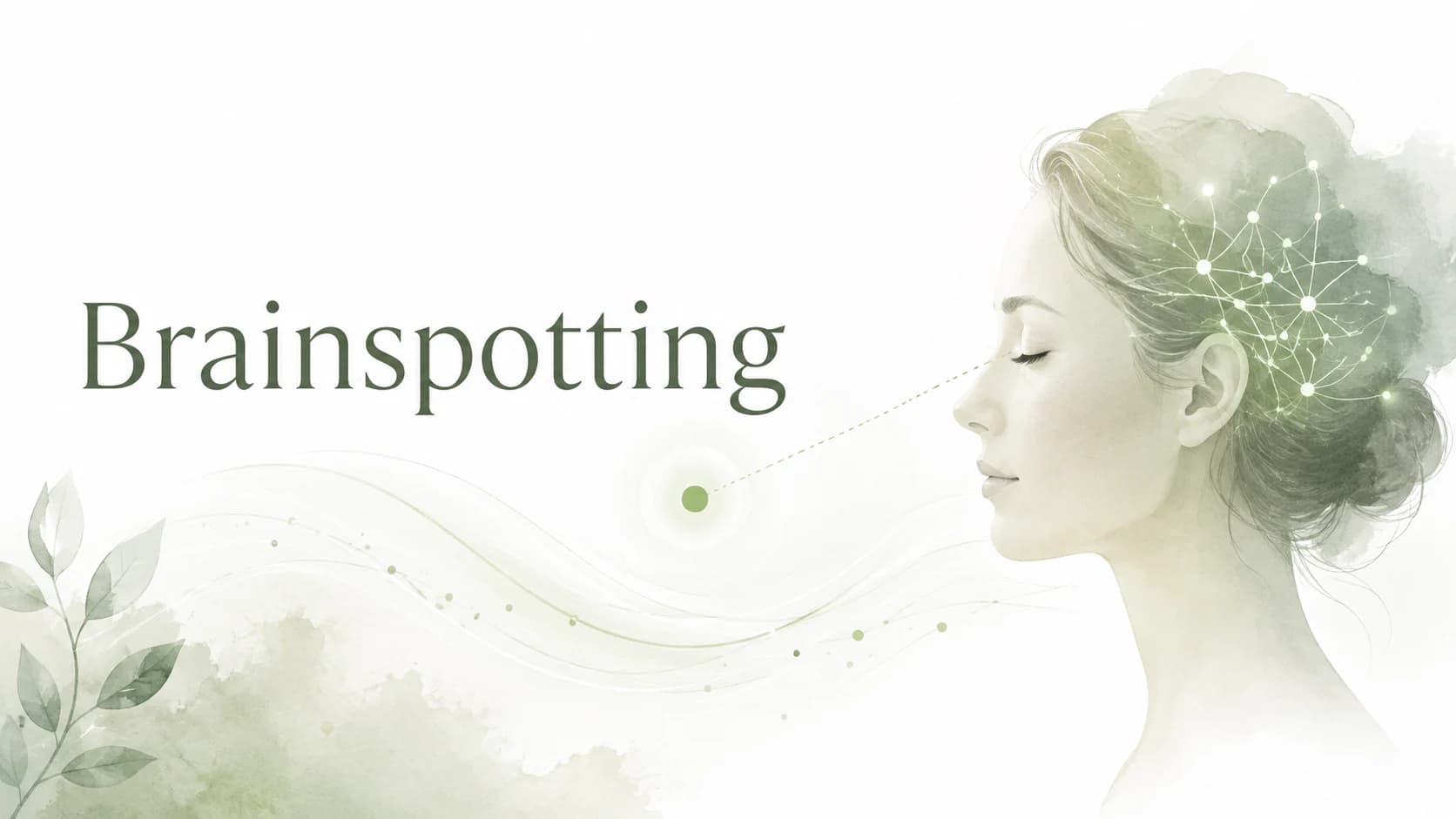
- Brainspotting. This works on the idea that where you look affects how you feel. By finding a specific eye position connected to a distressing feeling, we can access and release trauma held deep in the brain, in places words often cannot reach.
- TF-CBT
- Trauma Focused Cognitive Behavioural Therapy, or TF-CBT. This is a bridge between the two worlds. It keeps the helpful thinking tools of talk therapy, but adds a careful, paced focus on the trauma itself and on calming the body, so the cognitive work can actually take root.
So which one is right?
The honest answer is that it depends on you, your story, and what your nervous system is ready for. Often it is a blend, chosen together and adjusted as we go. You do not need to figure this out on your own or arrive knowing which method you need. That is my job.
What I most want you to take away is this. If you have done everything right in talk therapy and still feel stuck, you are not broken, and you have not run out of options. You have simply found the place where a deeper, body based kind of healing begins.