Trauma & healing
What Is Brainspotting? A Simple Guide to How It Heals Trauma
Where you look affects how you feel.
It sounds almost too simple to be true. But it is the idea at the heart of brainspotting, and once you understand it, a lot of things start to make sense.
If you have heard the word brainspotting and wondered what it actually is, here is the short, clear version.
What brainspotting is
Brainspotting is a way of finding and releasing trauma that is stored deep in the brain, in places that words often cannot reach. It was developed in 2003 by a psychologist named David Grand, who noticed something surprising while working with clients. Where a person held their gaze seemed to be connected to what they were feeling inside.
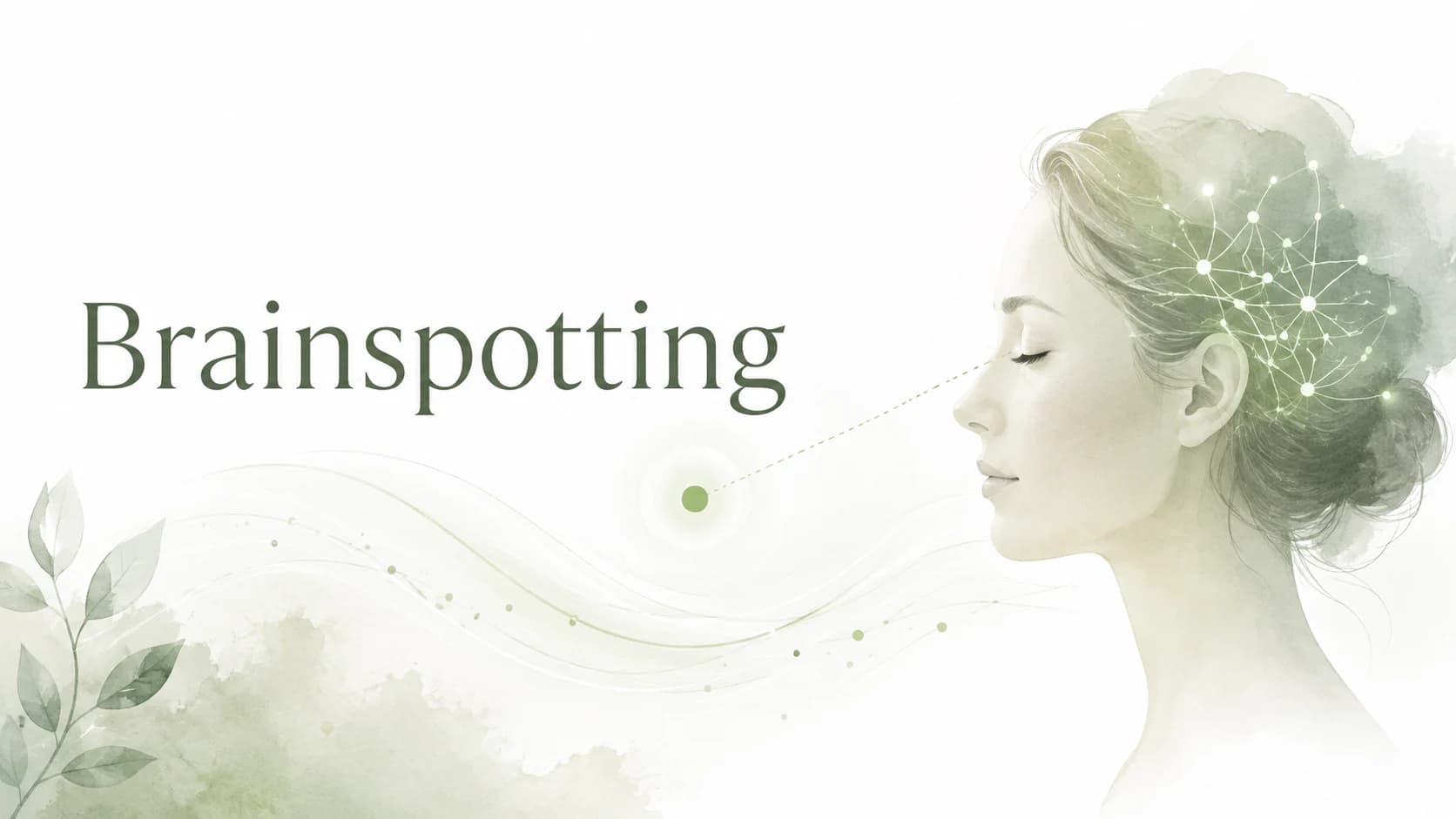
That is the whole foundation. A "brainspot" is simply an eye position that is linked to a particular difficult feeling or memory. When you look in that specific direction, you get closer to where the pain is actually held.
How it works
Think of your eyes as a doorway into the deeper, older part of your brain, the part that stores trauma as raw feeling rather than words. In a session, I gently help you find the eye position that connects to what you are working on. Then, while you rest your gaze there, we simply stay with whatever comes up, and let your brain do what it naturally knows how to do, which is process and release.
You do not have to talk the whole time. You do not have to explain every detail. Much of the healing happens quietly, below words, in the body and the deeper brain. My role is to keep the space safe and steady while your system does the work.
It is a little like using a pin on a map. The feeling has been there all along, but hard to locate. The brainspot marks the exact place, so your brain can finally tend to it.
What the research says
Brainspotting is newer than something like EMDR, so its research base is still growing, and I want to be honest about that rather than overstate it. That said, the early evidence is encouraging. One study of trauma survivors found that a few sessions of brainspotting eased symptoms of post traumatic stress about as effectively as the same number of EMDR sessions. Other early studies have reported meaningful drops in trauma symptoms within just a handful of sessions.
There are not yet many large trials, which is normal for a newer approach, and more research is underway. What we have so far points in a promising direction, and in my own work I have seen it reach places that talking alone could not.
When it helps
Brainspotting can be a good fit for trauma that feels stuck, for anxiety that lives in the body, for grief, and for those feelings you can sense clearly but struggle to put into words. It is often used on its own, and it also blends well with other approaches like EMDR and somatic work. As always, we choose the right tool for where you are, and we go at a pace that feels safe.
If you are curious
You do not need to understand the science to benefit from it. You only need to be willing to notice what you feel and let your brain do the rest. That part is more natural than it sounds.