Trauma & healing
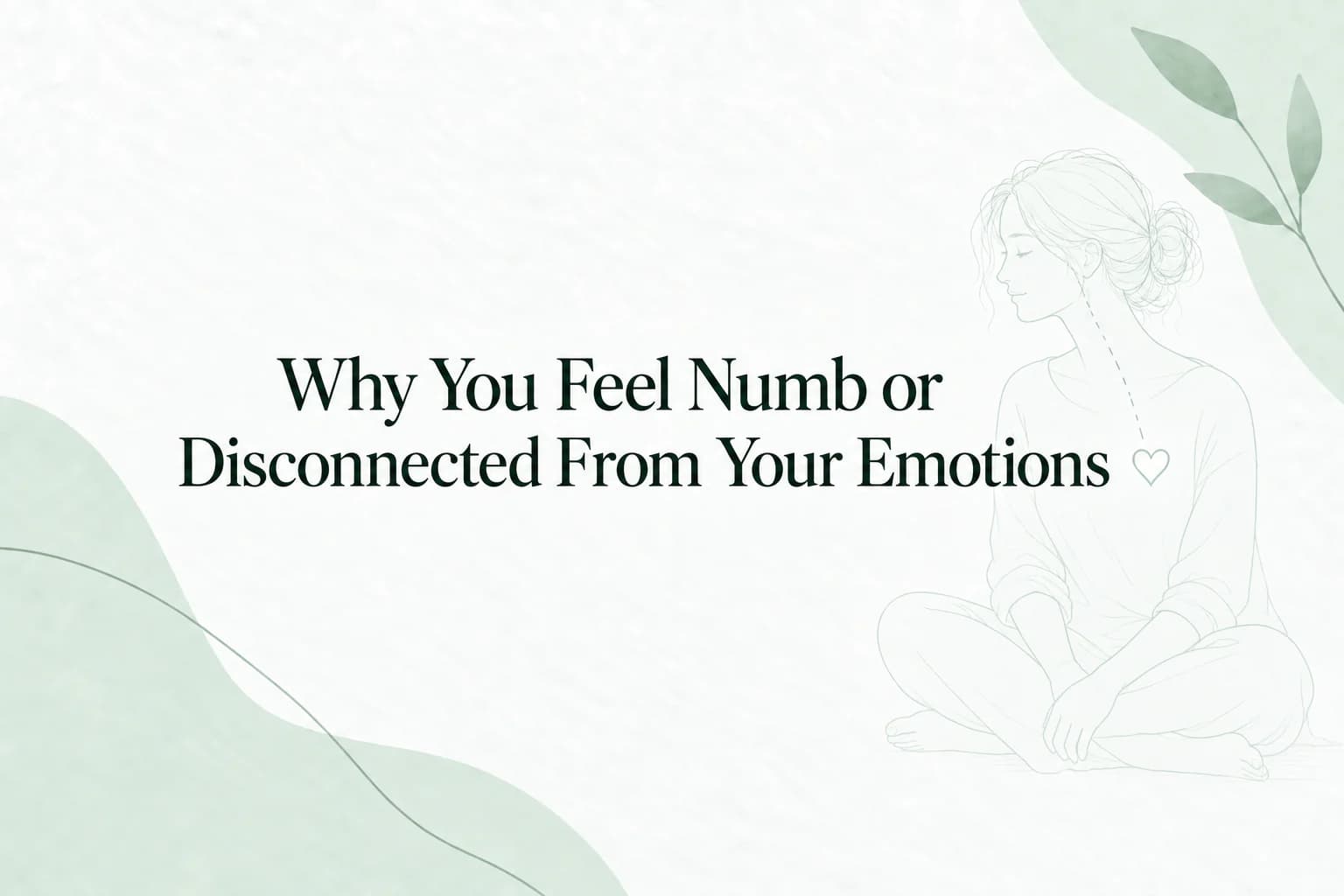
Why You Feel Numb or Disconnected From Your Emotions
Have you ever had someone tell you big news, good or bad, and you just sat there feeling nothing? You said the right words. You nodded. But inside, it was flat. Later you wondered what was wrong with you.
I hear this a lot. People tell me things like, "I don't really feel things anymore," or "I went to a funeral and watched it like I was behind glass." And they almost always say it with a bit of shame, like being numb means they are cold, or broken in some way.
So let me tell you the first and most important thing. If you feel numb, nothing is wrong with you. Numbness is not you being empty inside. It is actually your body protecting you. Let me explain how.
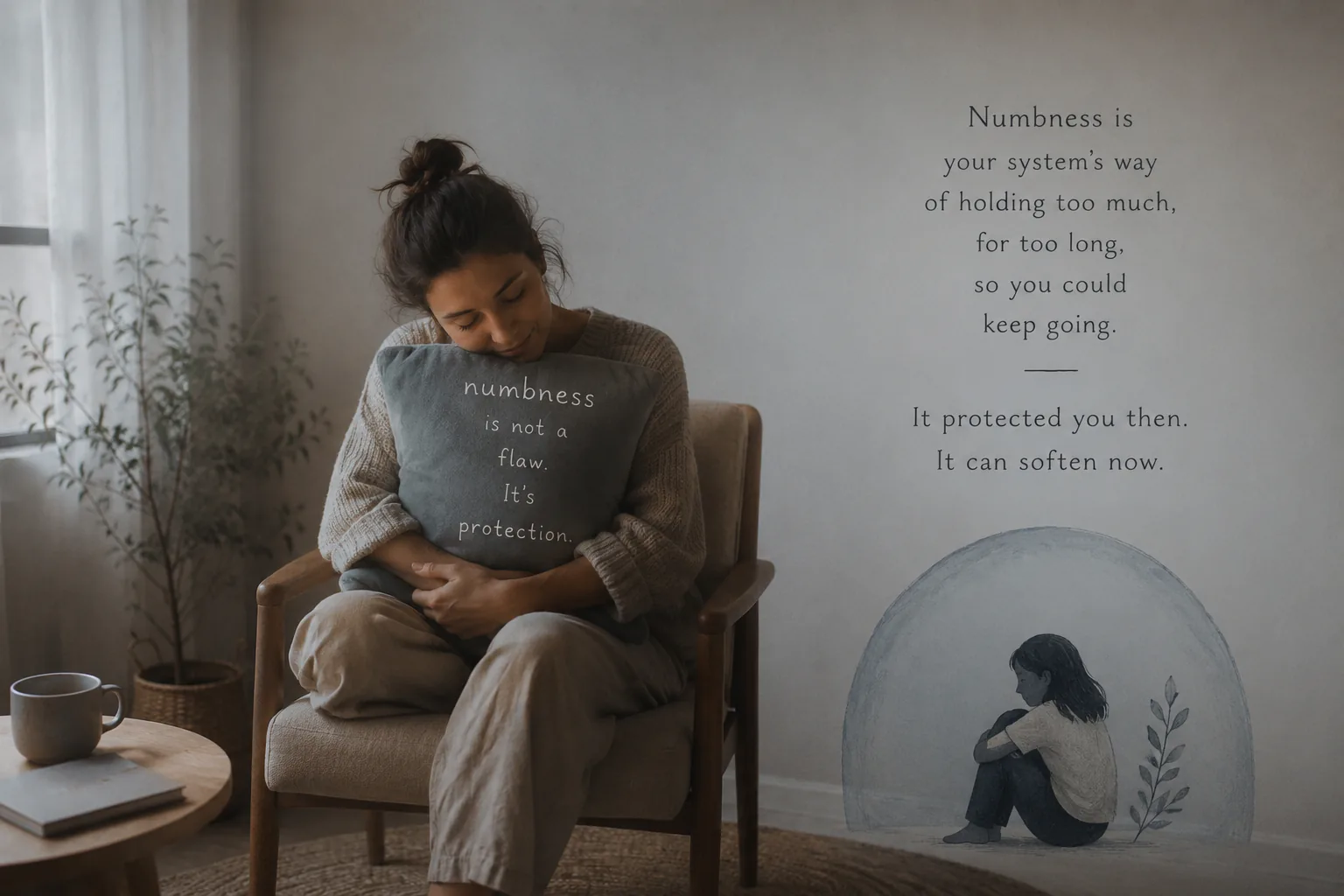
Numbness is protection, not emptiness
At some point in your life, feeling became too much. Maybe there was too much happening, too fast, and no one there to help you carry it. So a part of you learned to turn the feelings down, almost like turning down the volume, so you could cope and keep going.
That part did not do this to punish you. It did it to keep you safe. And it worked. The problem is, it never quite learned to turn the volume back up.
Your body has a shut down button
Most of us know about fight or flight. Something stressful happens and your heart races, you get tense, you want to run or snap. That is one way the body reacts to stress.
But there is another way, and not many people talk about it. When something feels too big to fight and too big to run from, your body does the opposite of speeding up. It slows everything down. Your energy drops. The world feels far away and foggy. You go quiet and still.
Think about an animal that cannot escape a predator. At the last moment, it goes limp and plays dead. That is not weakness. It is the body's way of surviving something it cannot fight. Numbness is that same shut down button in us. It is your body pulling the plug so you do not have to feel something at full force.
When numbness becomes your normal
Each of us has a kind of comfort zone for feelings. Inside it, we can feel sad, or worried, or happy, and still cope. It is when life pushes us way past that zone, again and again, that the body starts to shut down to survive.
If you grew up around a lot of stress, or fear, or a parent whose moods you always had to watch, your body may have spent a lot of time in that shut down place. And numbness slowly became your normal. Here is the hard part. Even when the stressful situation is long over, the body does not automatically switch back on. It is still waiting to feel truly safe first.
Why it started in childhood
A lot of the time, this begins when we are small. A child needs to feel things, but a child also needs the love of the people around them, more than anything.
So imagine a child who notices that when they get angry, or cry, or need too much, the people around them pull away, or get cold, or get upset. That child learns something very quickly. It feels safer to hide the feelings than to lose the love. So they become the easy one. The calm one. The good one who never causes trouble.
It works. It keeps the peace. But little by little, they lose touch with what they actually feel inside, because feeling started to seem risky. And that quiet habit can follow us for years, long into adulthood, without us even realising why.
So what does healing look like
This is the part I want you to really hear, because there is a lot of hope here.
First, healing is slow, and that is completely okay. You did not become numb overnight, and you will not undo it overnight either. Anyone who tells you to just feel your feelings, or just cry it out, does not understand how this works. When you push a numb body to feel big things too fast, it usually just shuts down harder. So we go gently.
It starts with safety, not with feelings. Before we go anywhere near old pain, your body needs to relearn what safe even feels like. And this can be small and simple. Feeling your feet on the floor. Noticing your breath slow down. Looking around the room and reminding yourself that right now, in this moment, you are okay. We do these small things again and again, until your body starts to believe them.
Then we go slowly, in small doses. Instead of diving into a huge feeling, we touch it just a little, then come back to feeling safe. Touch, and come back. Over time, your body learns something new. That feeling something does not have to mean drowning in it.
We also start really small with sensations, not big emotions. I might ask simple things. Are you hungry right now? Is this tea warm or cold? Do you feel tired? It sounds almost too simple, but this is how you slowly wake up the connection to your own body again, one small noticing at a time.
And here is the big shift. Instead of fighting the numb part of you, or hating yourself for it, we get kind to it. We thank it for how hard it has worked to protect you all these years. Strange as it sounds, when that part finally feels understood, it starts to relax. And the feelings come back on their own, gently, when your body trusts that it is finally safe.
People often tell me the little signs first. They cried at a song for the first time in years. They laughed properly, without thinking about it. They felt a small, quiet happiness on an ordinary morning and did not push it away. That is what coming back to life looks like. Not dramatic. Just real.
If this is you
You are not broken, and you are not cold. Your body did something very clever to help you survive, and it has just been waiting for a sign that the hard time is over.
You did not lose your feelings. They have been waiting for you on the other side of a door that was only ever trying to keep you safe. And that door can open again.