Trauma & healing
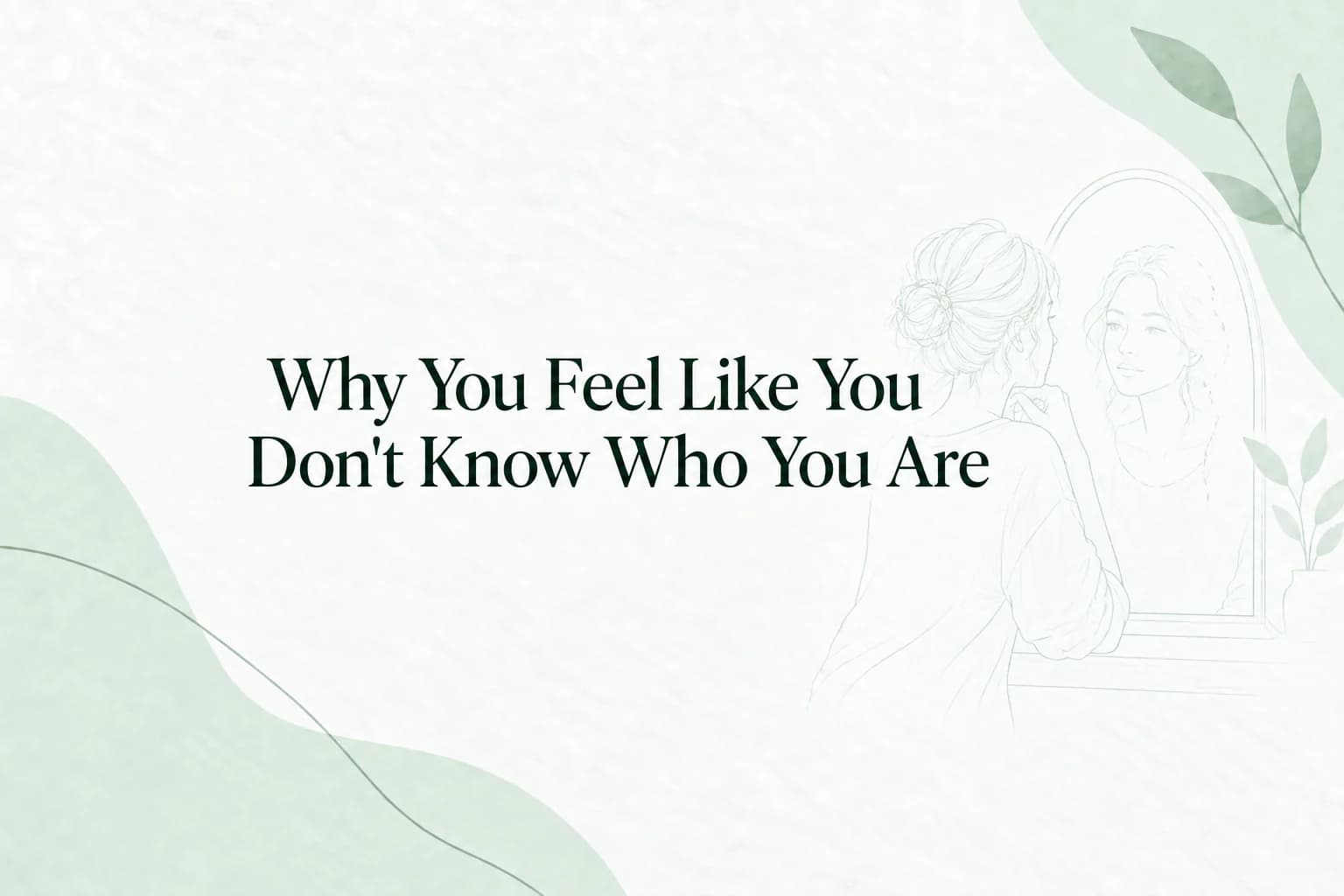
Why You Feel Like You Don't Know Who You Are
Someone asks you a simple question. Where do you want to eat? What do you actually want to do this weekend? And you go blank. You find yourself saying, "I don't mind, whatever you want." Not to be polite. But because, honestly, you are not sure what you want at all.
Maybe you have noticed you become a slightly different person depending on who you are with. Easygoing with one friend. Serious with a colleague. Quiet at home. And somewhere in the middle of all of it, you have lost track of which one is actually you.
I hear this so often. People sit across from me and say some version of, "I don't know who I am without everyone else's expectations." And they usually feel a little ashamed saying it, like everyone else got a memo about who they are and they missed it.
So let me start with this. If you feel like you don't know who you are, there is nothing wrong with you. This is not a personality flaw. It is something that happens for very real reasons, and it makes complete sense once you see it. Let me walk you through it.
You became whoever kept you safe
When we are small, we need the love and approval of the people around us more than anything. We depend on it to survive.
So if you grew up somewhere that you had to earn that love, by being good, by being quiet, by keeping everyone else happy, by never being too much, then a big part of you learned to focus outward. You got very good at reading the room. At sensing what other people needed and becoming that.
Here is the thing. A child who is busy learning how to keep everyone else okay does not get much space to ask the normal questions, like what do I enjoy, what do I believe, what do I want. Those questions felt unsafe, or they simply never got room to grow. So instead of building a solid sense of yourself, you built a radar for everyone else. That radar kept you safe back then. But it also meant your own self stayed small and hidden.
Different faces for different people
This is why so many people feel like they turn into a different version of themselves depending on who they are with.
It is not that you are fake, or two-faced. It is that you learned to shift and adapt to stay safe and accepted, and you got so good at it that it became automatic. One version of you handles conflict. One version keeps things light. One version works hard so no one can criticise you. Each of these grew up to protect you in some way.
The trouble is, when you spend your whole life being these different versions for other people, it gets very hard to feel who you are underneath all of them. You start to wonder if there even is a real you, or just a collection of roles you play.
There is a real you. It just got quiet, because being it never felt safe.
The shame underneath it
For a lot of people, there is something painful sitting under all of this, and that something is shame.
Not the small shame of making a mistake. A deeper, quieter belief that something about you, just as you are, is not okay. That if people saw the real you, they would not like what they found.
When you carry that belief, being yourself feels dangerous. So you do the logical thing. You hide the real you and present a version you think will be more acceptable. More impressive, more easygoing, more whatever you think they want. And every time you do that, the gap between who you really are and who you show gets a little wider, until you can barely find yourself in there at all.
The heartbreaking part is that shame lies. It tells you that you have to be someone else to be loved. But the very thing that makes you feel unworthy, that deep caring about being accepted, is actually just proof of how human you are.
Feeling far away from yourself
Sometimes this goes a step further, and people describe feeling almost unreal. Like they are watching their own life from the outside. Like they are going through the motions but not really there. Empty when things are quiet, because when you take away everyone else's expectations, you are not sure what is left.
This is your mind's way of coping too. When staying fully present with yourself feels too painful or too unsafe, a part of you drifts away from it. It is another kind of protection. But it can leave you feeling like a stranger in your own life.
So what does healing look like
Here is the hopeful part, and I want to spend real time here, because this is where things actually change.
Finding yourself again is not something you figure out in a weekend, and it is not about suddenly deciding who you are. It is slower and gentler than that. It is more like coming home to yourself, one small step at a time.
It starts with tiny things. Noticing what you actually feel and want in small, low stakes moments. Do you want tea or coffee? Not what is easier, not what the other person is having. What do you want? Do you like this song, or are you just used to it? These questions feel almost silly at first, but this is exactly how you rebuild the connection to yourself, one small honest answer at a time. You give yourself the years of exploring that you never got as a child.
It also helps to get to know those different parts of you instead of fighting them. The people-pleasing part, the perfectionist part, the part that goes quiet. Rather than trying to get rid of them, you get curious about them. Each one showed up to protect you. When you start to understand why they are there, they soften, and you slowly get to feel who you are underneath them.
A big part of this is learning to meet your own shame with kindness instead of more criticism. When that harsh voice says you are not enough, healing is learning to pause and speak to yourself the way you would speak to someone you love. Not to fake positivity, but to slowly teach yourself that you were always allowed to just be you, without earning it.
And it means letting a few safe people actually see you. Not everyone. Just one or two people, or a therapist, where you can practise being real and slowly learn that you do not disappear when you stop performing. That the real you is not too much, and is not unlovable. Every time someone stays after seeing the real you, the shame loses a little of its grip.
People tell me the small signs first. They caught themselves having a genuine opinion and saying it out loud. They realised they actually did not want to go to something, and did not go. They felt like themselves for a whole afternoon and noticed how good it felt. That is what coming home looks like. Quiet, ordinary, and real.
If this is you
You are not empty, and you are not fake. You are someone who learned, very early, that being yourself felt risky, so you tucked the real you away to stay safe.
But that self is not gone. It has been waiting, patiently, for it to feel safe enough to come out. And with a little time and kindness, it will.